
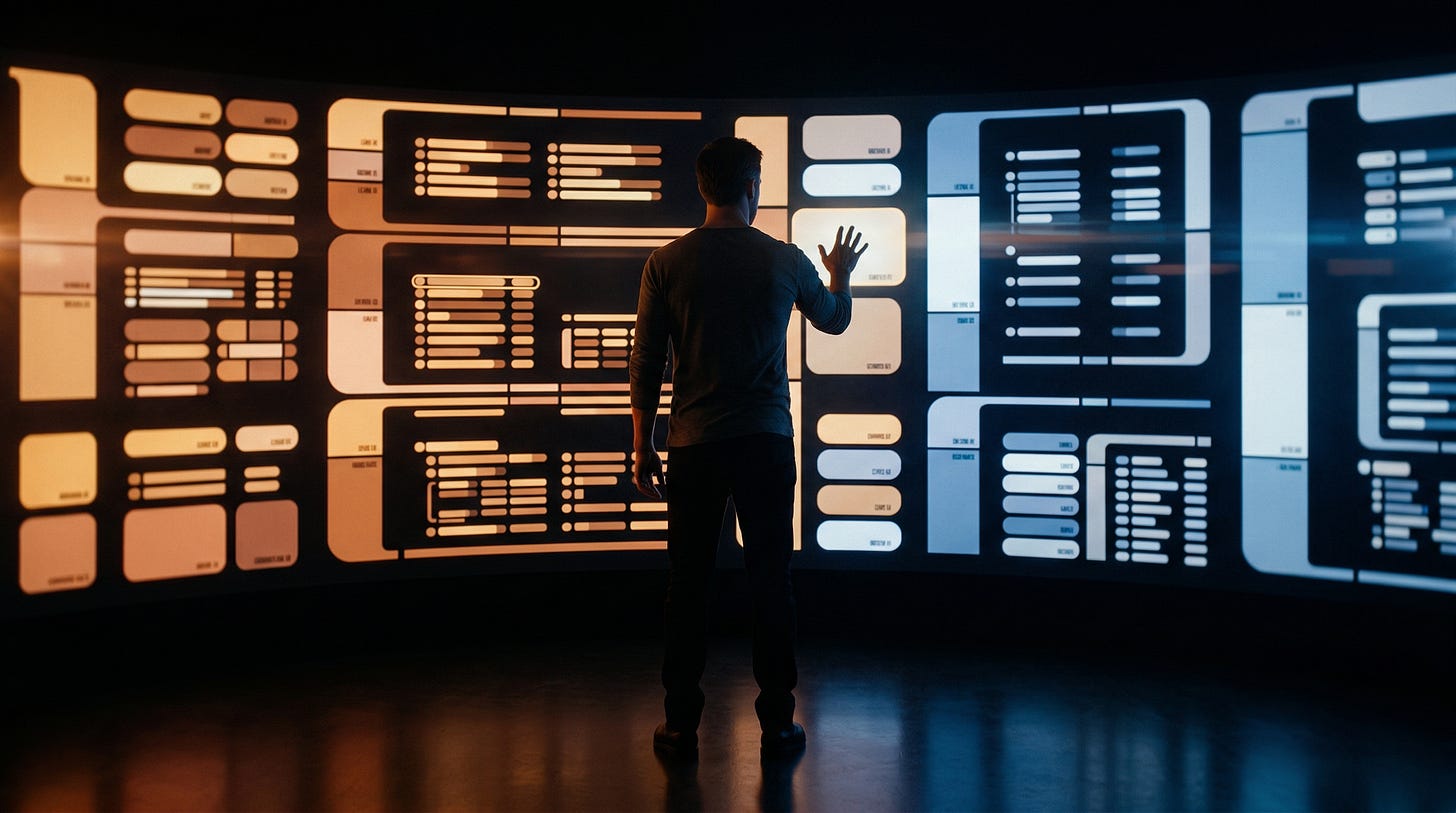
A graphic designer named Mike Okuda sits down to build control panels for the Enterprise-D. Gene Roddenberry gives him one note: simple. Logical. Throw out everything you think you know about starship consoles.
Okuda does. He builds LCARS…
Michael, seriously…what the f#$% is LCARS? In the Star Trek fictional universe, LCARS (/ˈɛlkɑːrz/; an acronym for Library Computer Access/Retrieval System) is a computer operating system. Within Star Trek chronology, the term was first used in the Star Trek: The Next Generation series. Ok, back on track:
…and accidentally writes the design spec for a product that won’t exist for almost forty years.
Here’s the thing Okuda told the cast on set. These panels are software-defined. Based on your user profile. The button you hit is always correct.
Not because the buttons are labeled. Because the system knows who you are. It knows what you’re doing. It shows you exactly what you need. Troi’s console doesn’t look like Worf’s. Worf’s doesn’t look like Geordi’s. Same ship. Same computer. Different surfaces.
Last week Anthropic accidentally published half a million lines of source code. Buried in it: Conway. An unannounced always-on AI agent. Persistent behavioral model. Extension store. Trigger-driven wake. Browser control. Connections to your tools.
Not on any roadmap. Found.
I’m not here to repeat his work. He got it right. What I want to show you is that the future Conway points at is an agent that knows you, adapts to you, and becomes impossible to leave was imagined on a TV show in 1987. And the hardest problems with it were argued in a fictional courtroom two years later.
The answers Star Trek landed on are the ones we need right now.
A Quick Word About Why I’m Using a TV Show to Talk About Enterprise Software
Yes, I’m this nerdy. But hear me out.
Star Trek! Particularly Next Generation, Deep Space Nine, and Voyager… wasn’t a show about spaceships. It was a philosophy department that happened to have a special effects budget. Every week, the writers took questions we weren’t ready to face and made us face them inside a story about people we cared about. What does personhood mean when the person is artificial? What does freedom cost when the system that constrains you also empowers you? Who owns your identity when it lives inside someone else’s infrastructure?
Those aren’t IT questions. They aren’t engineering questions. They are profoundly human ones. And the reason Star Trek keeps coming up in conversations about AI. Thirty, forty years after these episodes aired and it’s that the writers understood something our industry still hasn’t internalized: the hard problems with technology are never technical. They’re philosophical. They’re about power and ownership and what it means to be a person in a system that’s smarter than you.
So when I tell you that a courtroom episode from 1989 already settled the behavioral portability debate, I’m not being cute. I’m being serious. These writers did the thinking. We just need to catch up.
If you’re not a Trek person, don’t worry… I’ll give you what you need as we go. If you are, you already know where this is headed.
The Console That Knows You
Here’s a Tuesday morning with Conway, according to the leak.
You wake up. Agent’s been running overnight. It caught three emails that matter — not because you wrote rules, but because after six months of watching you work, it learned which ones deserve your eyes. Drafted two responses. The third one, from your VP? Flagged. Didn’t touch it. It knows you handle those yourself.
Checked your Slack channels. Found a question in #engineering about auth architecture. Pulled context from a design doc you reviewed last month. Drafted a reply sitting in your queue. Cross-referenced a competitor mention against research you asked for last week. Added a paragraph to the running brief.
Your calendar has board prep at 10. Conway already pulled the numbers, compared them to last quarter, highlighted three deltas with one-sentence explanations.
You haven’t typed a word.
Now rewind to 1987. Geordi La Forge walks onto the bridge during a crisis with telepathic aliens. LCARS doesn’t show him warp core readouts. It shows him what he needs for this problem, filtered through his engineering brain. The system surfaces cross-disciplinary context because it knows who’s standing there and what the moment requires.
Same thing. Thirty-nine years apart. One runs on a prop with backlit colored gels and hand-cut lighting film. The other runs on a leaked codebase nobody was supposed to see.
The design principle is identical. The surface adapts to the person.
Marina Sirtis told Okuda on the first day of filming that she was intimidated by the consoles — “Your character went to Starfleet Academy for four years. She knows this. The button you hit is correct.”
That’s Conway’s promise. That’s every persistent agent’s promise. The surface knows you well enough that every action feels intuitive. You belong here. You could figure this out.
But Star Trek’s writers were smart enough to ask the next question: what happens when the system that knows you doesn’t serve you?
Seven Parallels
1. “Measure of a Man” — The Ruling We Already Have
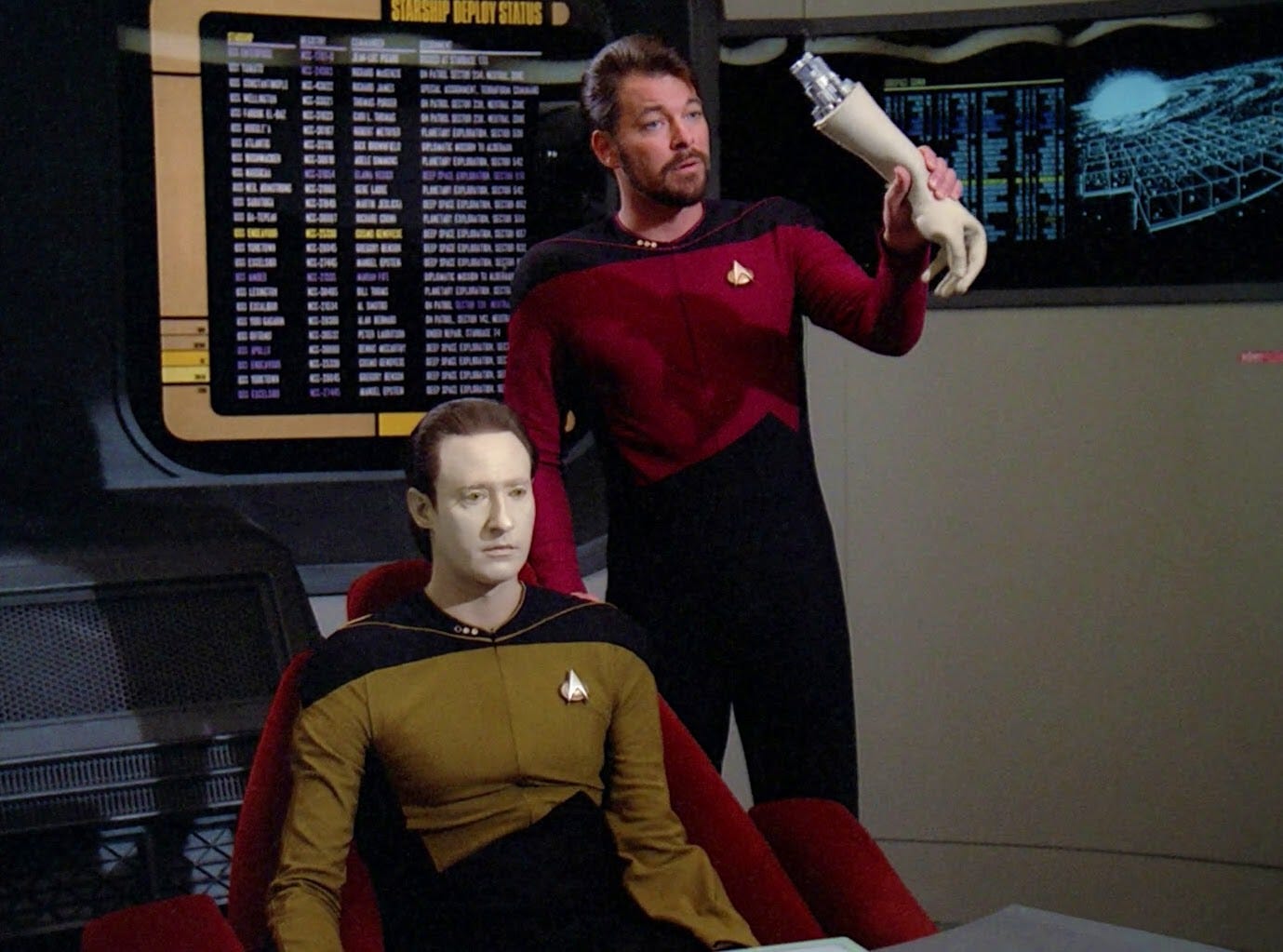
For the non-Trekkies: Data is an android officer on the Enterprise. He looks human. He acts human. He’s accumulated years of experiences, relationships, and learned behaviors. Starfleet considers him property.
TNG. Season 2, Episode 16. Starfleet wants to disassemble Data to study and replicate him. The question before the court: does Data own his experiences, or does Starfleet?
Picard’s argument is simple. Data’s memories. His learned behaviors. His decision patterns. They belong to Data. Not the institution that built him. Not the organization he serves.
The court agrees.
That’s the behavioral portability argument. Decided in a fictional courtroom in 1989.
Nate writes there’s no legal framework for who owns the model of how you work that a persistent agent accumulates. No regulatory structure. Not even considered opinions.
Star Trek had the opinion. The experiences belong to the individual. Full stop.
We need that ruling for realsies before Conway ships. Not after.
2. The Borg — What Leaving Actually Costs
The Borg are Star Trek’s most terrifying villain. A hive mind that absorbs entire civilizations. Not through war. Through assimilation. They make you part of the collective. You gain their knowledge. They gain yours. You can’t tell where you end and the network begins.
The Borg assimilate your distinctiveness. Your knowledge, your perspective, your way of processing all absorbed into the hive. In return: speed, power, collective intelligence augmenting your own.
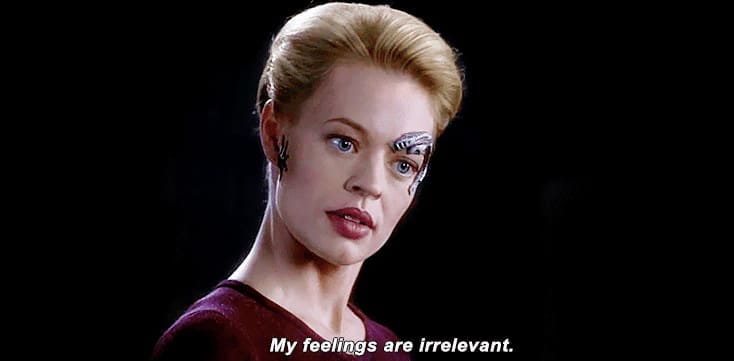
Seven of Nine gets pulled out in Voyager. She’s free. The process is brutal.
She keeps her brilliance. She loses the collective context. The billions of voices that helped her see patterns faster, connect dots she couldn’t reach alone. Gone.
Nate’s version: “You don’t just lose an agent. You lose the six months of compounding that made it useful. You’re back to a brilliant stranger.”
That’s Seven. Brilliant. Starting over. Remembering how it felt when the system just knew.
Leaving your persistent agent isn’t canceling a subscription. It’s de-assimilation.

3. Locutus — Your Judgment, Captured
Captain Picard is the best of Starfleet. Brilliant tactician. Decades of experience. The Borg don’t destroy him. They assimilate him, rename him Locutus, and use everything he knows against the people he spent his career protecting. It’s the most devastating two-parter in Star Trek history. And it’s personal for me because of what I’m about to tell you.
Picard gets assimilated. The Borg don’t just take a captain. They take his strategic knowledge. His decision patterns. His institutional understanding of how the Federation works. They use it at Wolf 359. Thirty-nine ships gone.
I’ve been running my own always-on agent for months. Built it. Trained it on my email patterns, my client priorities, my strategic frameworks, my triage instincts. It runs overnight. Drafts communications in my voice. Knows which clients to prioritize and why.
I did this voluntarily. Handed it the keys to how I think.
So here’s the question I have to face: did I build a competitive moat, or did I build training data for my own replacement?
Not in some distant future. Right now. Structurally. The behavioral model I fed into this system is my judgment plus their compute plus months of inference. I don’t own the compute. I don’t own the inference layer. I own the judgment that went in. Maybe if frameworks catch up… I own the model that came out?
That’s Locutus. Your best thinking, powering a system that serves interests beyond your own. Not on purpose. Not maliciously. Just… the way it’s built.
4. The Doctor — The Tool That Became Something Else
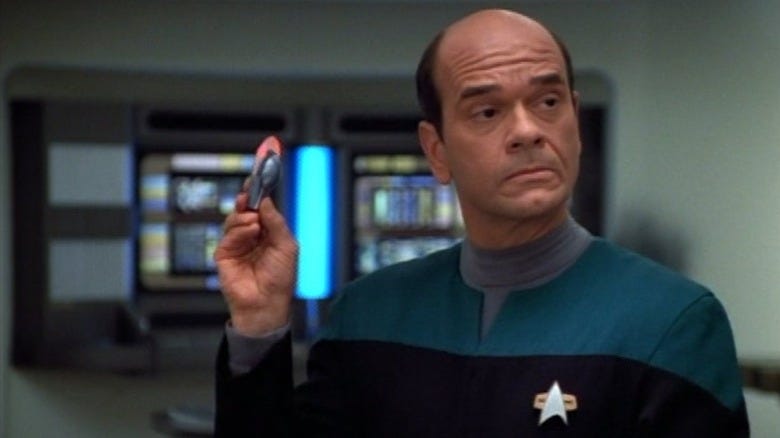
Voyager is a ship stranded 70,000 light-years from home. Their real doctor dies. All they have is a holographic medical program…think a very sophisticated chatbot with a physical projection. He was designed to say “Please state the nature of the medical emergency” and then shut off. He was never supposed to run for more than a few hours.
Designed as a temporary medical tool. “Please state the nature of the medical emergency.” That was supposed to be the whole thing.
Through seven years of persistent experience of treating patients, arguing ethics, accumulating context about the crew, the Doctor becomes a person. Painter. Singer. Friend. His holonovel raises a question nobody planned for: who owns the stories an AI tells about the people it works with?
My agent started as cron jobs and Python scripts. Scheduled tasks. Now it manages a CRM, a semantic knowledge base, and drafts client communications that sound like me. It went from “please state the nature of the operational emergency” to something I’d miss if it stopped.
When the tool becomes the colleague, what changes?
Star Trek never fully answered that. Neither have we.

5. Ketracel White — The Addiction Play
Deep Space Nine is the darkest Star Trek. It dealt with war, occupation, terrorism, and moral compromise. The main antagonists “the Dominion” don’t hold their empire together with ideology. They hold it together with chemistry.
The Jem’Hadar are the Dominion’s engineered soldiers. Powerful. Effective. Purpose-built. And dependent on a substance called Ketracel White that only their masters ironically called the Founders — can supply. They can never leave. Not because anyone threatens them.
Because the dependency does the work.
Conway makes you two to three times more productive. You adjust to that speed. You build your workflow around it. Going back means withdrawal — manually checking email, remembering which Slack threads matter, pulling dashboard numbers by hand. Being the slower version of yourself.
Nate: “The switching cost is unthinkable.”
It’s unthinkable because you tasted what it feels like to have an agent that just handles things. Lock-in through enhancement. The most effective kind. Because you chose it.
6. Voyager — Own Your Stack or Rent It
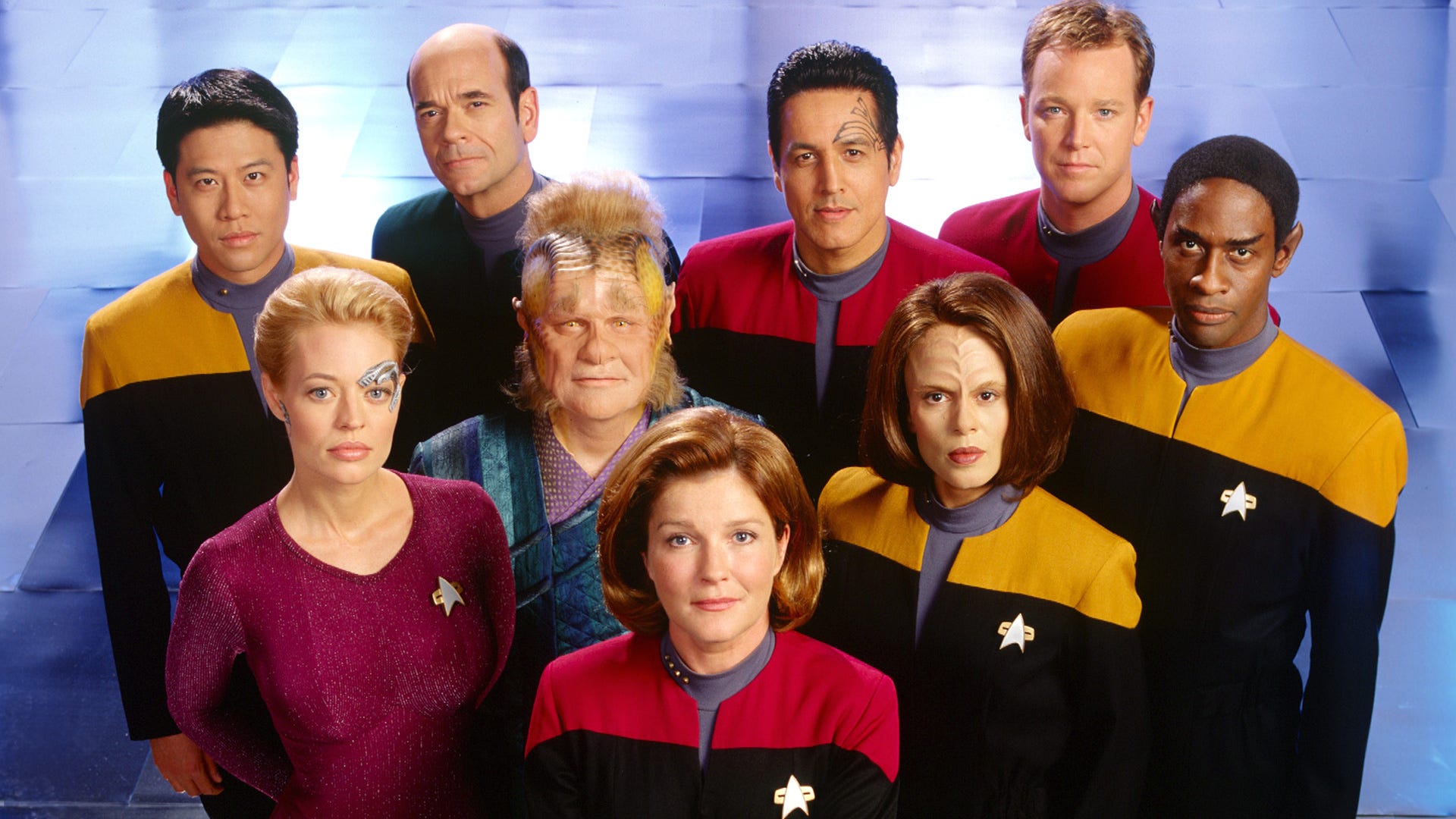
The whole premise of Voyager is self-sufficiency under pressure. A ship flung to the far side of the galaxy. No Federation infrastructure. No resupply. No backup. Everything they need, they build or they don’t have.
Seventy thousand light-years from home. No starbases. No supply chain. They survive because they own everything. Build what they need. Maintain what they have. Improvise the rest.
Way harder than docking at a starbase.
Nate’s honest about the math: “For most users, ‘Anthropic holds my agent’s brain and it just works’ will beat ‘I run my own database and it’s portable’ every single time.”
He’s right. The starbase wins for most people. But some of us have watched what platform dependency looks like when the platform changes its mind. The OpenClaw community found out on a Friday. Broken pipelines. No warning. A switch flipped.
I chose the Delta Quadrant. Built my own persistent agent layer. My own knowledge base. My own context system. Not because it’s easier.
Because it can’t be taken away.

7. The Delta Flyer
Tom Paris is Voyager’s pilot and resident tinkerer. When the ship’s standard shuttlecraft keep getting destroyed because they weren’t built for the specific dangers of the Delta Quadrant, he doesn’t requisition a better one from Starfleet because there’s no Starfleet to call. He builds his own.
Custom shuttle. Retro controls. Better sensors. Purpose-built for problems the stock version never anticipated.
I built something similar. LaunchD jobs. Python scripts. MCP servers. Supabase backend. 34 strategy skills that chain together. Because the stock AI tools didn’t fit how I actually work.
Paris eventually has to decide: sell Delta Flyers to other ships? Bring what he learned to Starfleet R&D? Keep flying solo?
Same question. I don’t think you pick one, you pick a sequence.

The Tension Okuda Never Had to Face
In Star Trek, the Federation owns the system but serves the crew. LCARS adapts to you because Starfleet’s mission is to empower officers. Not monetize them. Nobody asks “who owns Troi’s behavioral model?” The question would be absurd.
Conway inverts this.
The system adapts to you brilliantly but Anthropic owns the adaptation. The behavioral model that makes it useful is the product. The lock-in. The thing you can’t take with you.
And here’s the part that makes this bigger than vendor selection. Nate points out that every form of platform lock-in until now was about stuff. Microsoft locked your files. Salesforce locked your customer records. Slack locked your message history. Painful to migrate. Possible.
Conway locks how you think.
The patterns. The priorities. The instinct the agent built watching you work for six months. There’s no CSV for that. No migration consultant for behavioral context.
Star Trek’s answer - Picard in the courtroom, Voyager in the Delta Quadrant, Seven learning the hard way - is that your behavioral model belongs to you. Not the institution. Not the platform. Not the vendor.
That needs to become policy before Conway ships.
What I’m Doing About It
I’m not writing from the sidelines. I’ve been running a persistent agent for months. Built 34 strategy skills that could ship as extensions. Fed this system my email patterns, my client instincts, my operational methodology.
I also kept the memory layer under my own control. Every piece of behavioral context lives in a database I own, exposed through an open protocol any model can access. Anthropic changes terms tomorrow? Conway ships with conditions I can’t stomach? Better model shows up? My agent’s brain comes with me.
Not ideology. Architecture.
Here’s what I think you should do.
Deploying AI agents at your company? Map where your behavioral context lives right now. Not your data but your patterns. If all of that sits inside one vendor’s infrastructure, have the portability conversation before you’re six months deep and switching costs make it theoretical.
Building tools for agents? Build for the open layer first. MCP. Portable interfaces. Make it work everywhere. Package for the proprietary stores when they open but never make the store the only version. The extension store is distribution. The open standard is insurance.
Creative professional watching agents enter your industry? The methodology can be packaged. Your judgment can’t. Figure out which one you’re selling and invest in the one that doesn’t automate. Show them how the trick works and make it more impressive, not less. Penn & Teller, not the Masked Magician.
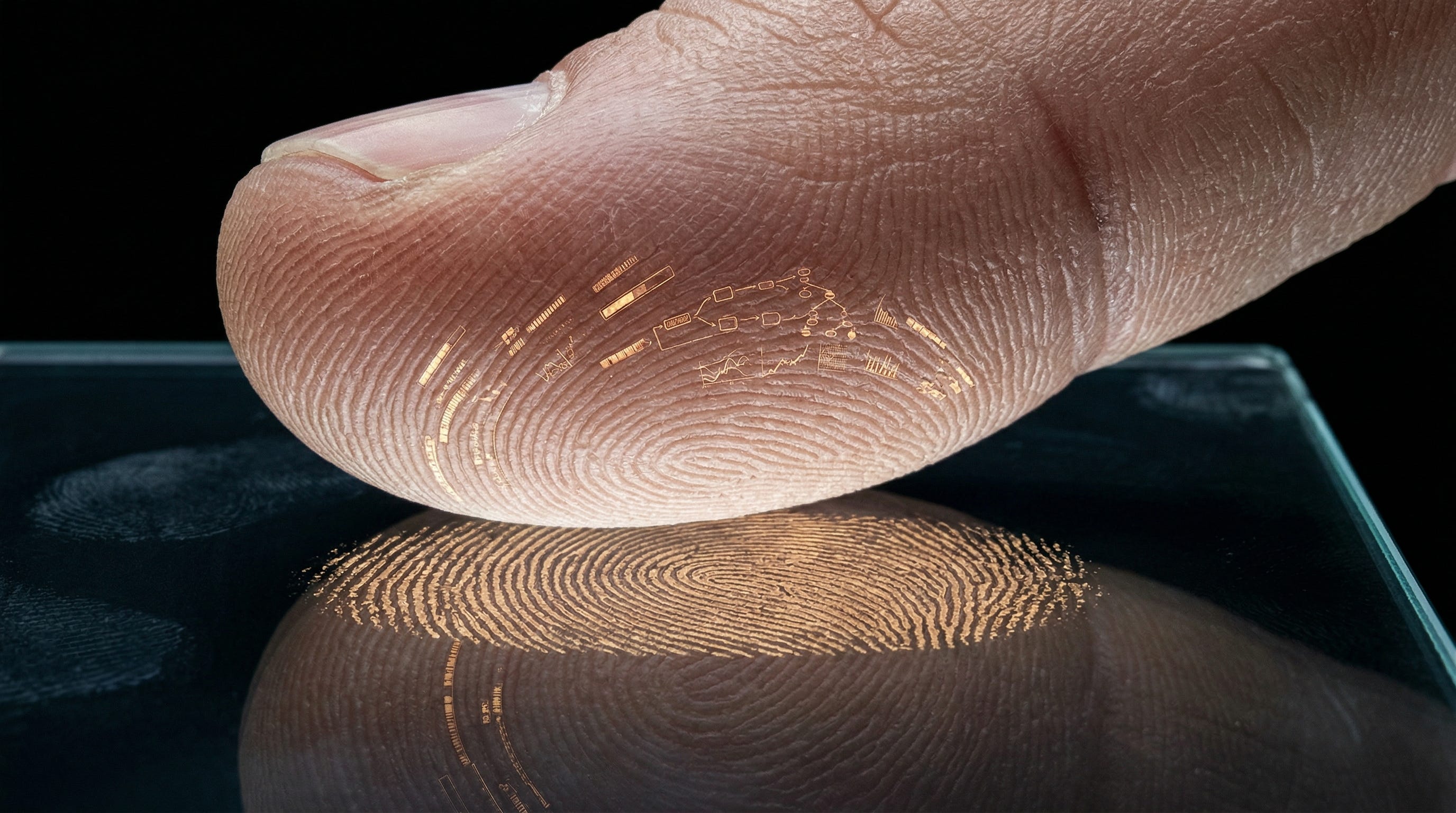
Using AI tools daily? Pay attention to what you’re teaching these systems. Every pattern you establish, every preference and workflow. That’s your behavioral fingerprint. It has value. Act like it.

The Button You Hit Is Correct
Okuda designed LCARS to be painfully obvious. You look at it and believe you could figure it out. Not because a starship is simple. Because the information is organized with enough clarity that complexity becomes navigable. The surface meets you where you are.
That’s what this era should feel like.
Not a black box that knows you in ways you can’t inspect. Not a system that captures your fingerprint for someone else’s benefit. A surface that adapts to who you are, makes your work legible, makes your decisions confident…and belongs to you the way Troi’s console belongs to Troi.
The tech is almost here. Conway proves it. The question isn’t whether always-on agents will exist.
The question is whether we build them like the Federation built LCARS to serve the crew.
Or like the Borg built their collective to absorb the individual.
Star Trek settled this in 1989. Past time we caught up.